
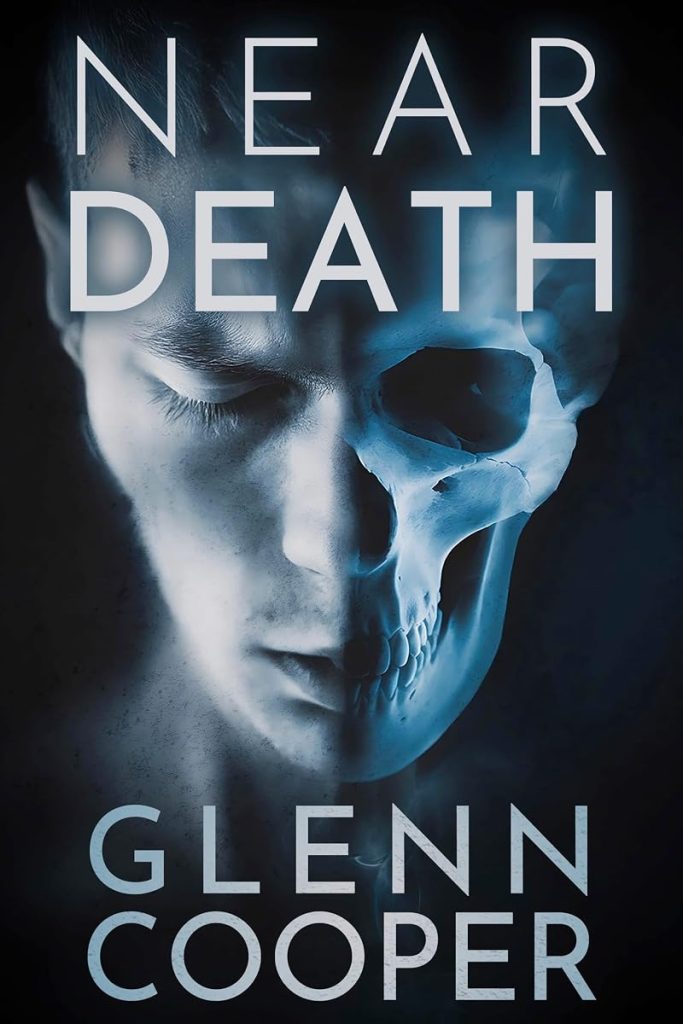
Near Death: A a genre-bending speculative thriller of science, faith and obsession
My thanks to Book Whisperer & Lascaux Media for access to this book. I also thank NetGalley for the access. Near Death presents an intriguing concept. A brilliant neuroscientist, Alex Weller, haunted by a childhood near-death experience, becomes obsessed with recreating it via a drug that grants a glimpse of the afterlife. Meanwhile an FBI agent, Cyrus O’Malley, is drawn into a series of ritualistic murders where victims have tiny holes drilled through their skulls. Cooper blends science thriller, crime investigation and existential questions into one narrative. The promise is bold, what if science could capture what lies beyond death, and what would the consequences be? In terms of pacing and plotting I found much to enjoy. Glenn moves the reader through multiple threads, Alex’s traumatic past, the murder investigation, the spread of the drug and its social implications, so there is momentum and a sense of urgency. It is a fast-paced, page-turner with suspense. The idea of life and death, belief and science, is worked into a genre thriller format which gives it a flavour of something a little more ambitious than a straightforward detective story. On the other hand the book is not without its flaws. For one some of the characterisation felt a bit thin. Whilst Cyrus is sympathetic (especially given his personal struggle with his daughter’s illness) and Alex is fascinating as the obsessed scientist, supporting characters are less memorable. The massive premise; what happens when a drug grants a glimpse of the afterlife sometimes pulls attention away from character depth. Also some plot developments felt convenient. The shifts between scenes and viewpoint characters occasionally disrupted the flow, especially early on. I risked losing track until the pieces started falling into place. Another point is the scientific and philosophical elements. Glenn Cooper clearly wants to raise questions about consciousness, death, the afterlife and human obsession. This is a plus. But at times the scientific exposition felt heavy and maybe even strayed into didactic territory. Readers who prefer lean thrillers might feel bogged down by the amount of explanation. The climax also felt perhaps a bit too neat given the complexity of the issues raised. Nevertheless there is real strength in the book’s ambition. The moral questions Alex grapples with (how far will one go to repeat a near-death experience?), the tension in Cyrus’s investigation and the societal dimension of what happens when a drug begins to alter people’s relationship with death all this gives the book weight. The thematic collision of faith and reason is compelling. The prologue sets up a global scale crisis which elevates the stakes beyond the usual serial killer fare. Near Death is an engaging thriller with an intriguing premise, solid suspense and thought-provoking themes. It may not fully excel in every area some character arcs and pacing issues hold it back from being exceptional but it delivers a satisfying read. If you like thrillers that blend crime with science and existential questions, this is a good pick. I give it a respectful 3.5 stars.
← All titles